“We have to be visible. We are not ashamed of who we are.”
— Sylvia Rivera
A person of any gender can perform in drag, but there is a long history of drag performers crossing society’s definitions of gender on and off of stage.
While cultural perception of drag has largely shifted to cisgender gay men, trans women in the early years of the gay rights movement often identified as drag queens–and some still do. Recognizable activists including Marsha P. Johnson and Sylvia Rivera are just two of the many trans women of color who fought for LGBTQ+ rights enshrined in law today.
Many performers today not only use drag as a way to have fun and express themselves, but also to explore their own relationships with gender.
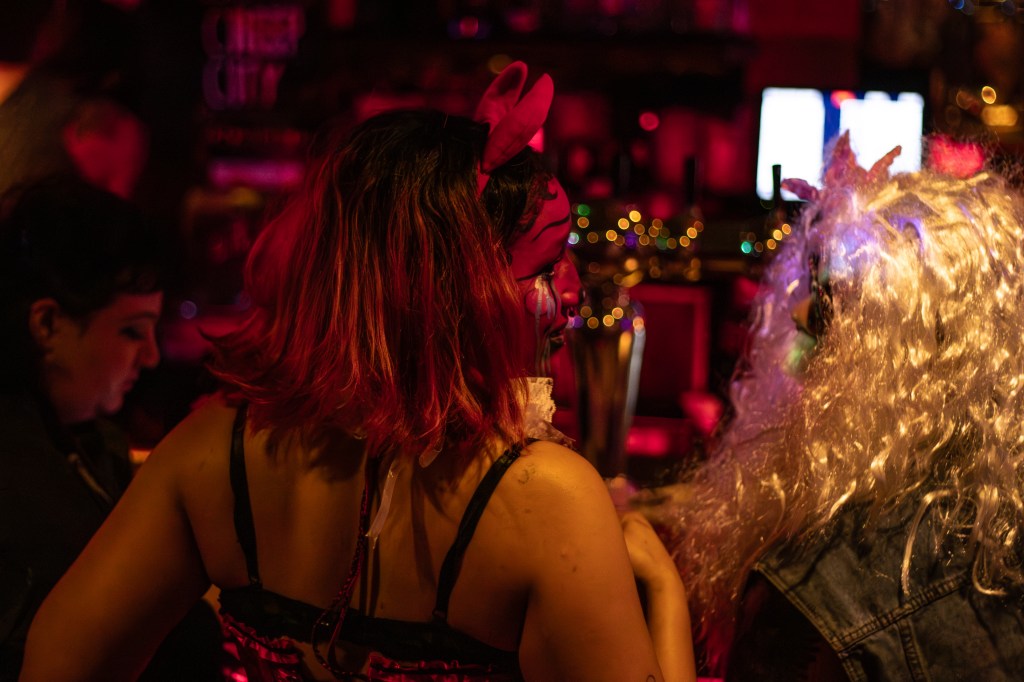
Many of these photographs were taken at We’re Still Here, a drag show dedicated to raising money for trans youth and suicide prevention. Now in its second year, the show was created by Rae Neitzke, a dance teacher and performer whose former partner Chris died by suicide in 2012. Friends and family found out through their journals that they were trans. Numerous studies show that trans people are more likely to experience all of society’s struggles than cisgender people–joblessness, poverty, homelessness, addiction, assault, mental health issues, disability, and suicide.
In spite of these things, queer spaces still exist where trans and gender nonconforming people can come together, creating opportunities for self-expression and joy. Some of their stories — in their own words — are assembled here.
OKTOBER THIRD — QUEERNESS FRONT AND CENTER
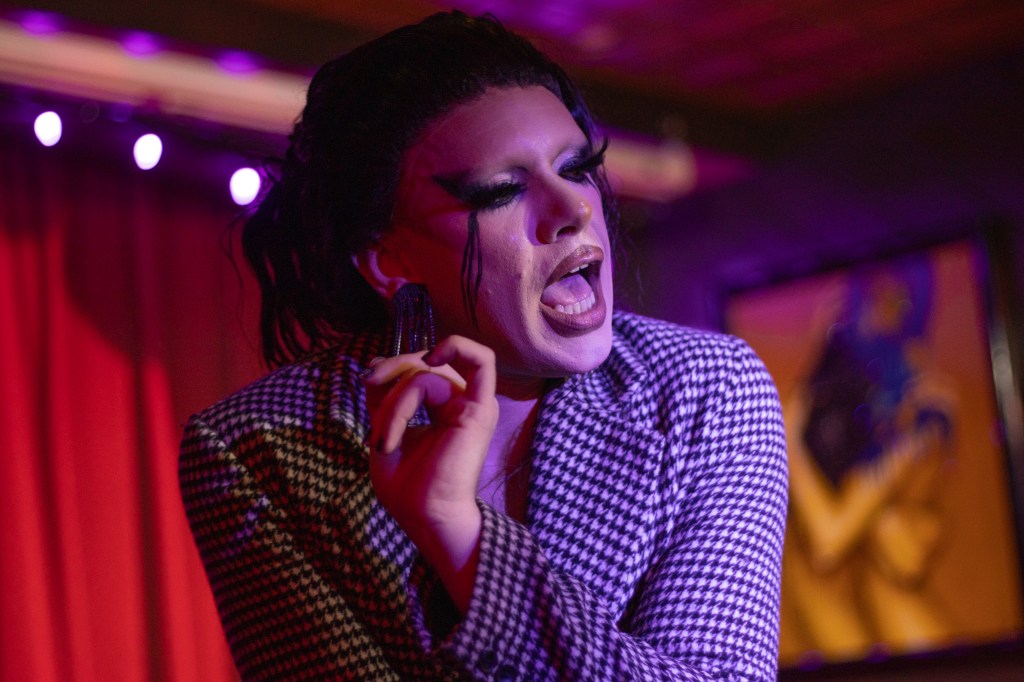
I ended up starting doing drag before getting better at makeup because my friend just pushed me to do it. I was like, “I really want to do it, but I don’t want to be ugly,” and they were like, “You honestly, just have to be ugly. It’s okay. Like, go do your performance, sign up for the open stage. You’re gonna be bad for the first time. You’re a fantastic performer so it won’t be gut-wrenchingly awful.” And that’s what happened. I just did it and then there were people in the community that gave me feedback and I took it all and I ran with it.
I do a lot of genderfuck stuff1. There are a lot of hyper femme elements about my drag, but I love to have my hairy chest out. I love to not tuck and highlight that part of my body and just switch things up, for people to think about more. I think what happens in conditioning for people to get on board with a common way of thinking is just to perpetuate standards and just being what the world expects you to be. I’m really interested in flipping that on its head and showing the extremes of sexuality or gender.
Putting queer bodies on the stage and then making them as glamorous and royal and beautiful as possible is also really satisfying to me because of how ‘low’ we are on the food chain. We’re treated as disposable, but putting our bodies on a fantastical, a fantasy level, it’s sparkly, we’re leading, and I always think that’s really interesting.
I think it’s a really beautiful thing, and an empowering thing, to — even if I’m not doing it intentionally because it’s normal for me — to put yourself in this higher role, to make yourself stand out more, to make your voice louder, to make your hair sparklier. because the world wants you to dim it down, the world wants you to be more palatable. What drag does is resist all of that. It says we’re going to go to the extreme. We’re going to be as loud as possible, as sparkly as possible, as queer as possible. And we’re just gonna keep doing that until — no, not until anything. We’re gonna keep doing that. And then the world will have no other choice but to make room for that to happen.
1 The term genderfuck emerged in the early 1970s and has become part of LGBTQ lexicon, referring to the practice of visually rebelling against the ideas of binary gender. Read more at https://www.dictionary.com/e/gender-sexuality/genderfuck/
HENLO BULLFROG / JOY TANEY — PERMISSION TO BE MESSY
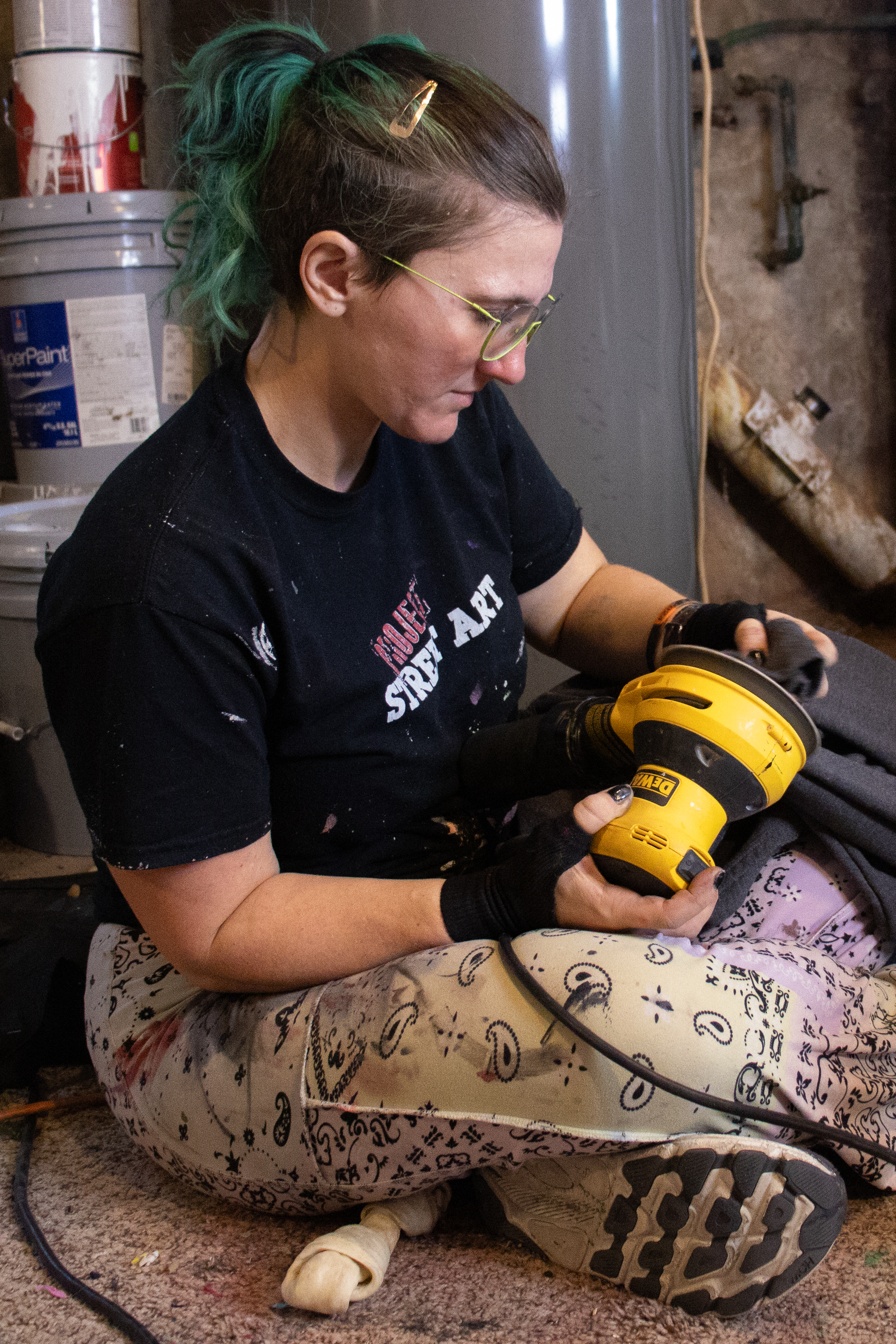
A drag king friend of mine and I were hanging out, and I got in face as a king at their place. I’m like, “Damn, like why am I having so much fun?” And I realized that it was just all clicking for me in a way that being queen hadn’t. I was still figuring out my own relationship with gender. At the time as a queen, I was just elevating every lesson that the culture was trying to get me to internalize anyway, whereas as a king, I got to finally rediscover and redefine my own understanding of gender for myself. And that really just took off because I had so much fun being a drag king that, yeah, the rest is history.
I didn’t know that there was this cryptid inside of me, and then I put on the boy makeup and I’m like, “Why am I making jokes about how this character lives in a trash can in the alley? I’m doing the Bigfoot pose all the time. Where is this coming from?
Even though my parents being the hippie folk musicians they were, didn’t necessarily have these gender rules in their household, the rest of the world still has the gender rules, and I was picking them up and being like,”Oh well if I want to ‘do girl,’ I guess I can’t be off-putting. If I want to ‘do girl,’ I have to be somewhat acceptable.” With Henlo, I can be off-putting and unacceptable—but it’s coming back full circle, because I have to make them a little more hireable by making him a little sexier too.
I’m just more myself in the drag world– just that shape shifter element, that respecting that you don’t have to be at a point on the spectrum, or you can be off the spectrum. And that you’re understanding even day by day, doesn’t have to be binary, I guess allows me to show up more in the fullness of myself in that, like, whoever I am that day, like, whatever emotion I’m embodying, whatever how I’m how I’m presenting how I’m holding myself really has that freedom and that open open availability to just be there and be the shapeshifter that I am.
I think something that is really essential to both the drag experience and the trans experience, the queer community experience, is—We don’t necessarily want to be fully acceptable by the mainstream or the masses. There is still this holding on to the things that make us, much like Henlo, a little off putting to Ma and Pa in the suburbs.
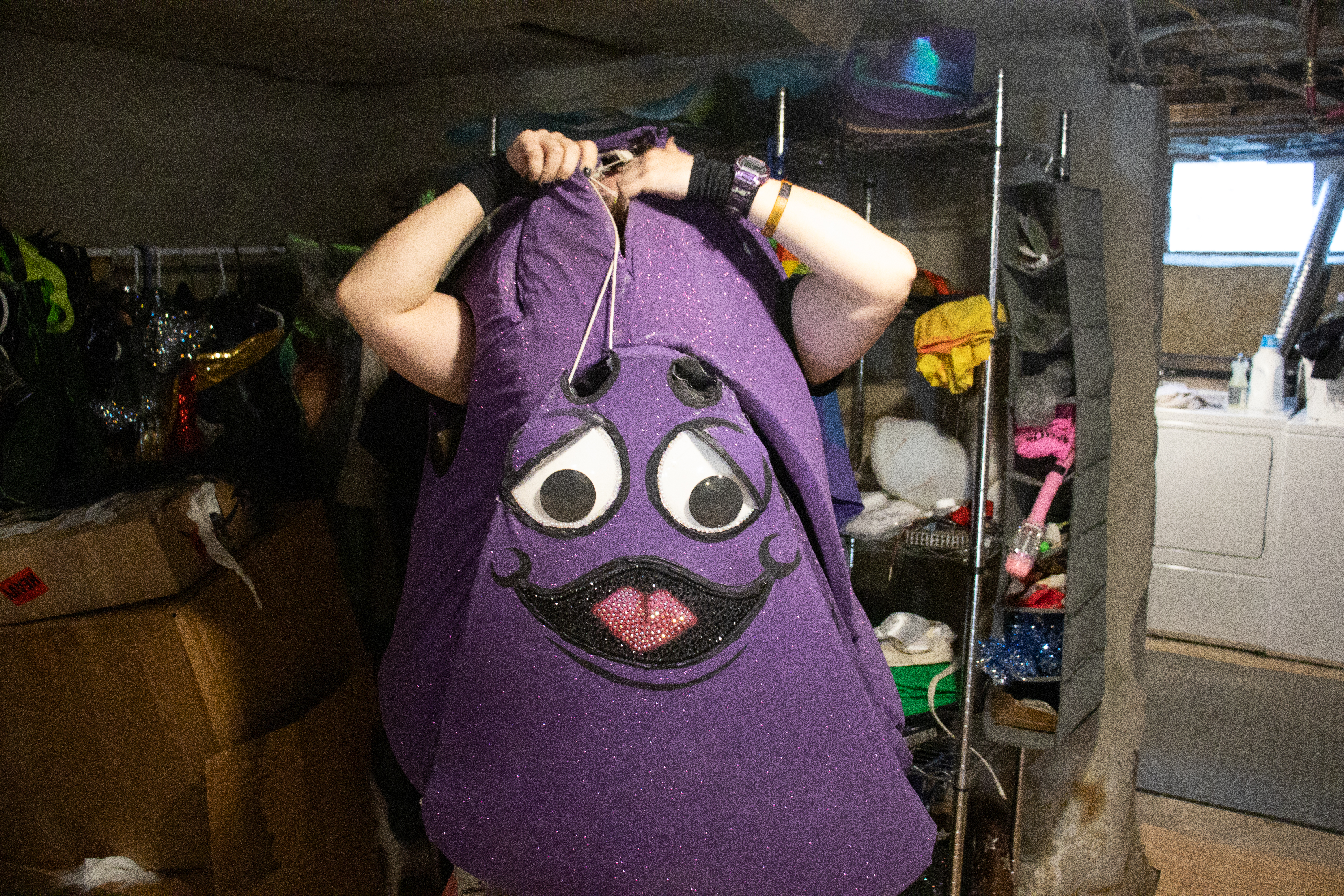
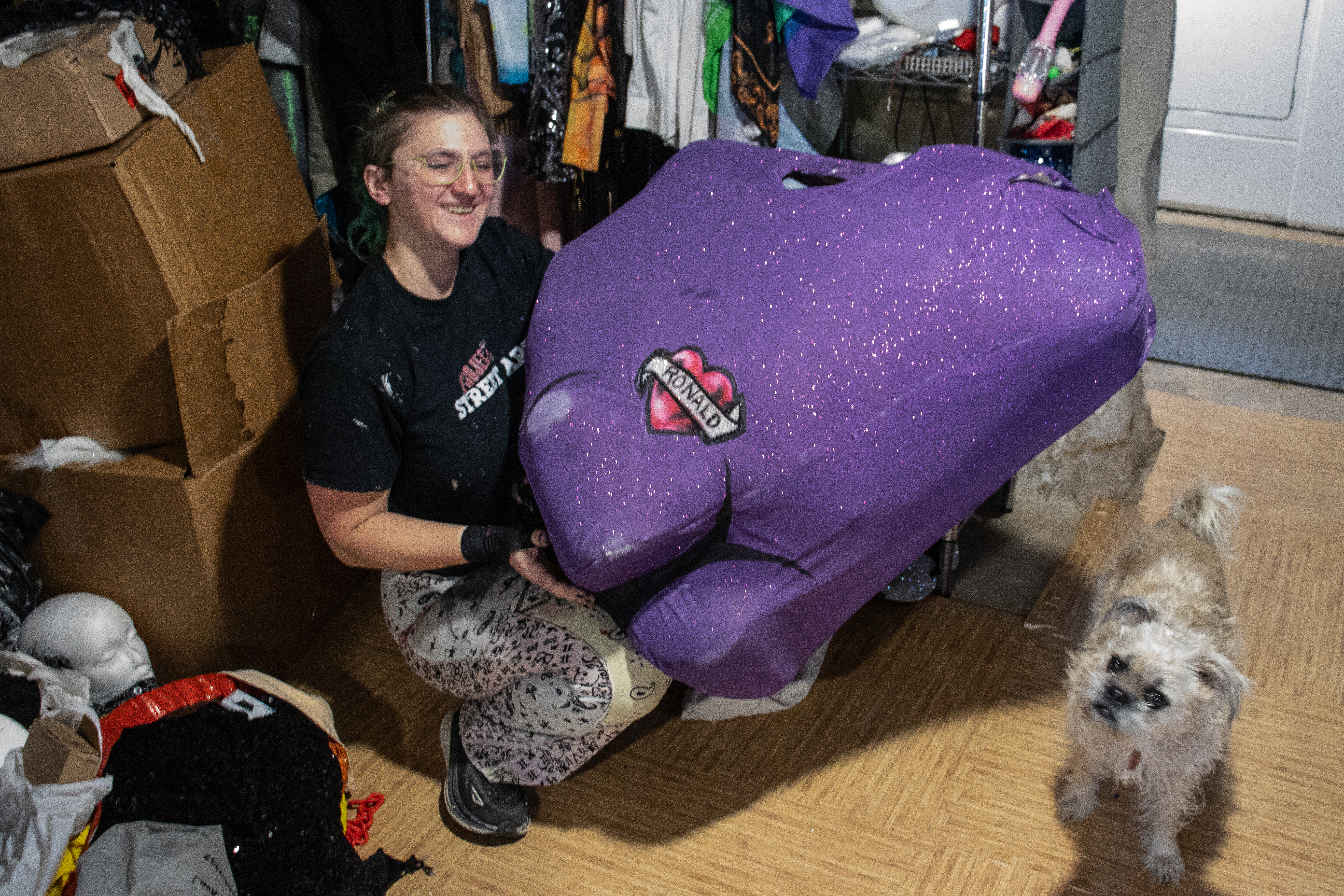
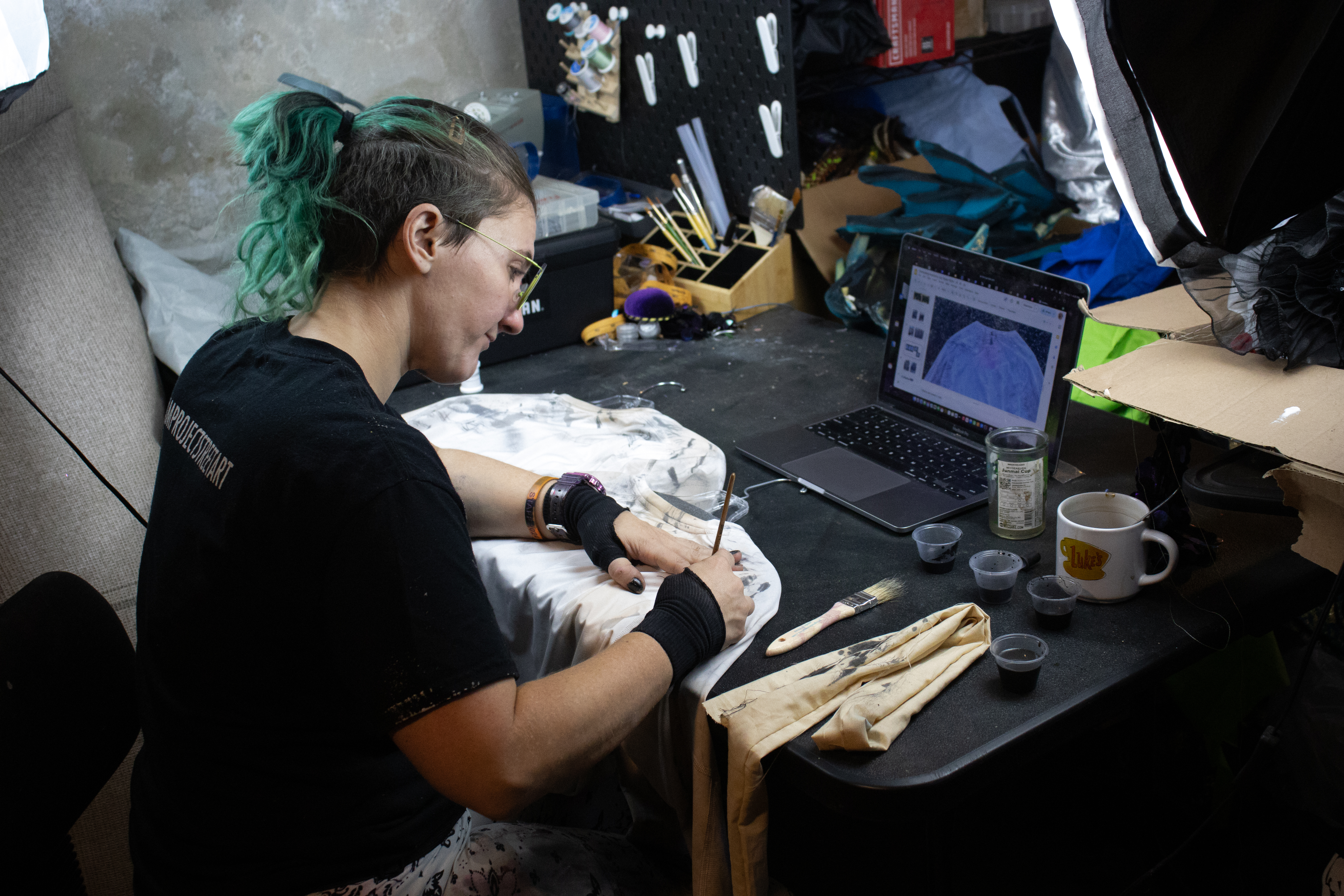
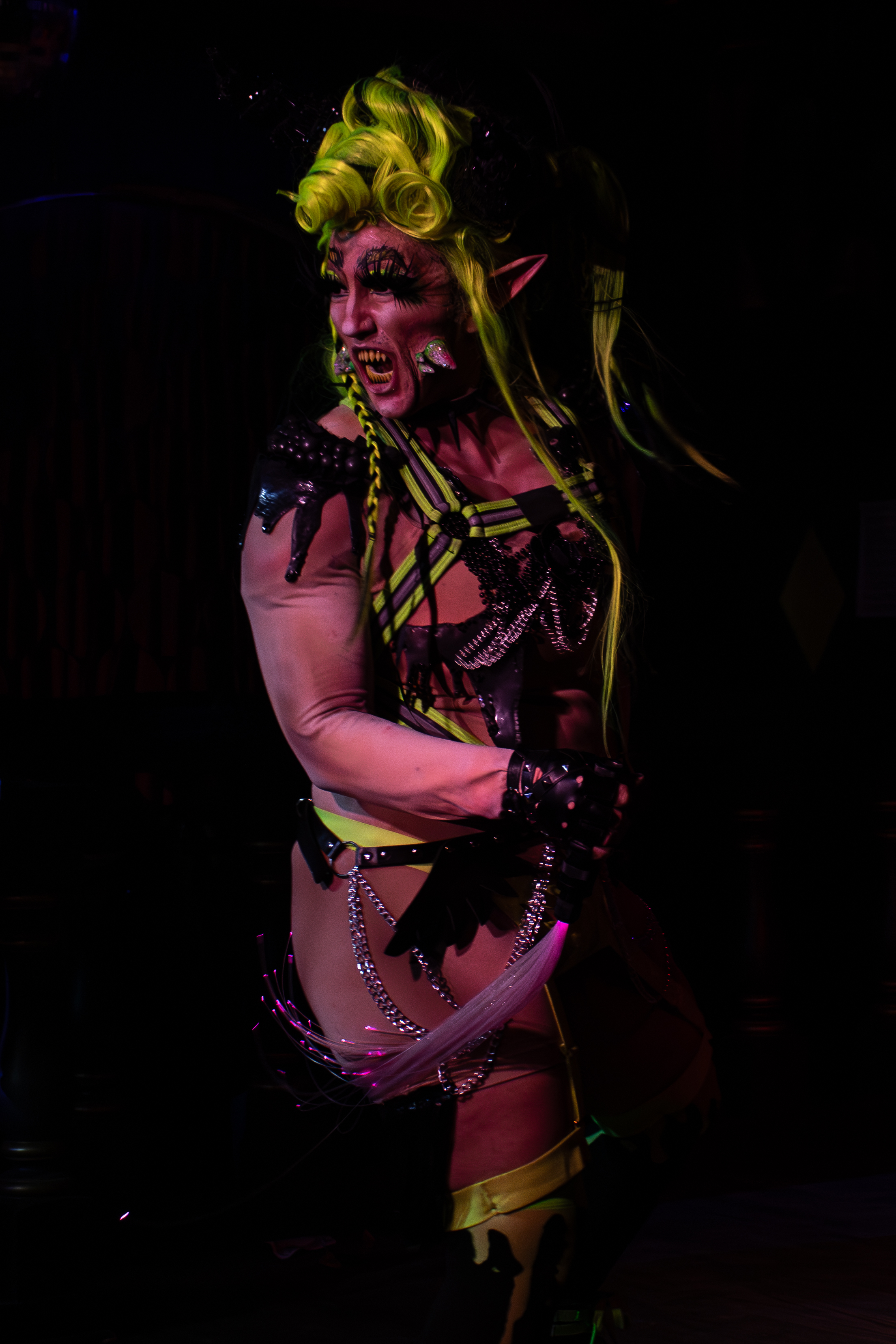
Taney also creates costumes as part of their job—including work for RuPaul’s Drag Race, Dragula, and an upcoming Netflix TV show—and for entertainment, including the Grimace costume pictured above.
KISS THE CLOWN — LET IT ALL OUT
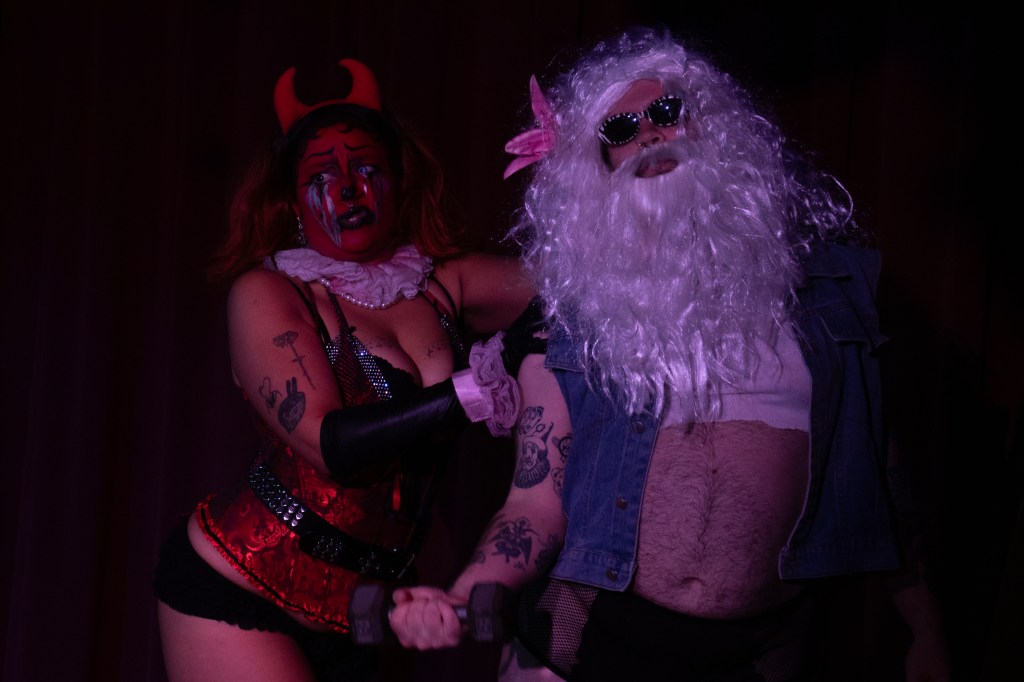
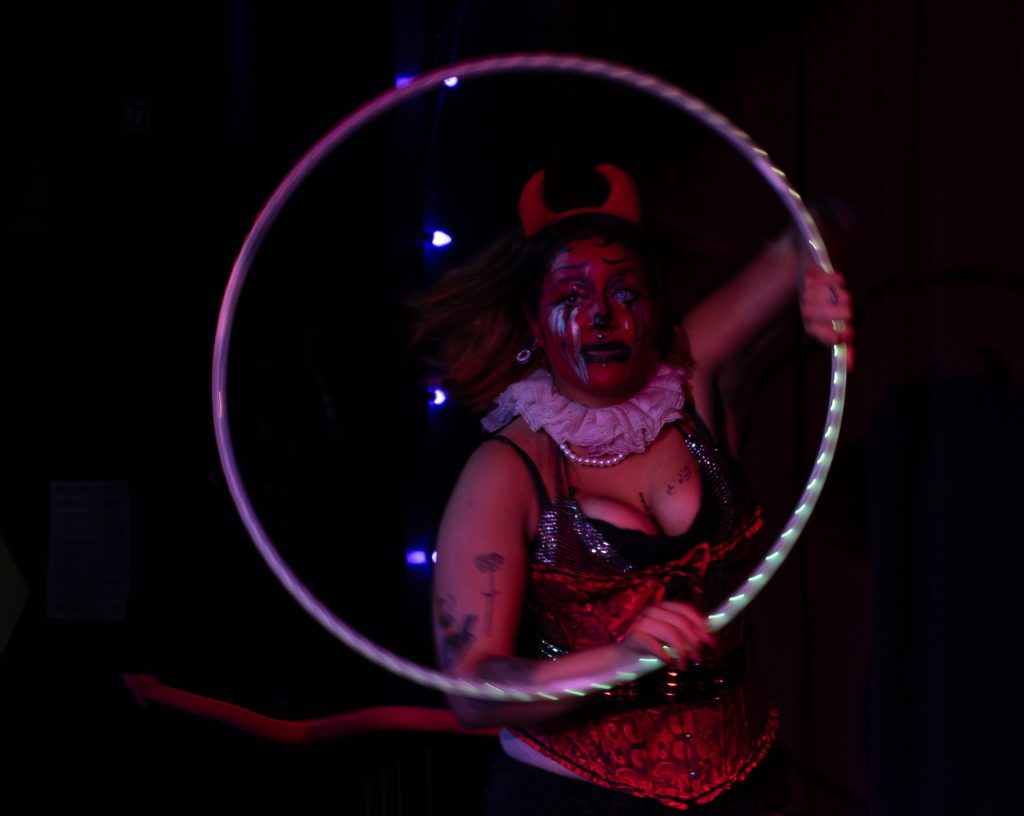
I’m a clown by trade. I started off doing circus arts, flow arts like hula hooping, and then I went to fire eating, fire breathing, and stuff like that. I didn’t really have a character. I was just me performing, but then a homie asked me to join one of their shows. I decided that my character was going to be a clown because I’m naturally just a clowny ass bitch. I won class clown in my yearbook. It just felt right. I feel like myself in clown makeup. I really wanted to make a character that was pretty much just an exaggerated extension of me. I was like, “I need to do something.” I need to perform in a way where I can pour my heart out, where I can be myself instead of looking hot and being eye candy for straight people.
Because I’m Black and obviously queer and I have a bigger body, it’s been really hard for people to look past that and book me for things. But when I did get booked—which I didn’t mind, I love looking like a little hoe and performing and stuff — but it wasn’t about the talent or anything like that any more. It was about looking hot and having to be eye candy for these people. And sometimes that’s not always fun. I make good money, but I don’t get to express myself on stage in a way that I do as Kiss the Clown. In queer spaces, I get to be silly1.
I can be really intense and like really ragey, and sometimes I feel like I can be too much. But when I do drag, I feel like everything that I feel on a daily basis I get to really put it all out there.
I don’t really see Kiss as any kind of gender—Kiss is kind of agender, just looks like a baddie, but you know they’re Sapphic as fuck and a romantic. It’s allowed me to express femininity without it having to be me. When I’m a clown, I just don’t see clowns as any specific gender. A clown is just a clown, and it’s really helped me to be able to express my femininity without feeling dysphoric, and it allows me to be sexy without the pressure of what sexy and what feminine is supposed to look like, what it’s supposed to be, and how I’m supposed to act.
1 Queer spaces have historically acted as sites of community-building and activism for queer people. The communities that form around them actively work to improve the social connectedness of a severely isolated population. Over the past decades, urban queer spaces have been under threat due to gentrification, the Internet, and population dispersal. (Noah Powers, Social Connectedness Fellow 2019)
PAPI POOKIE — GROWING UP TOGETHER
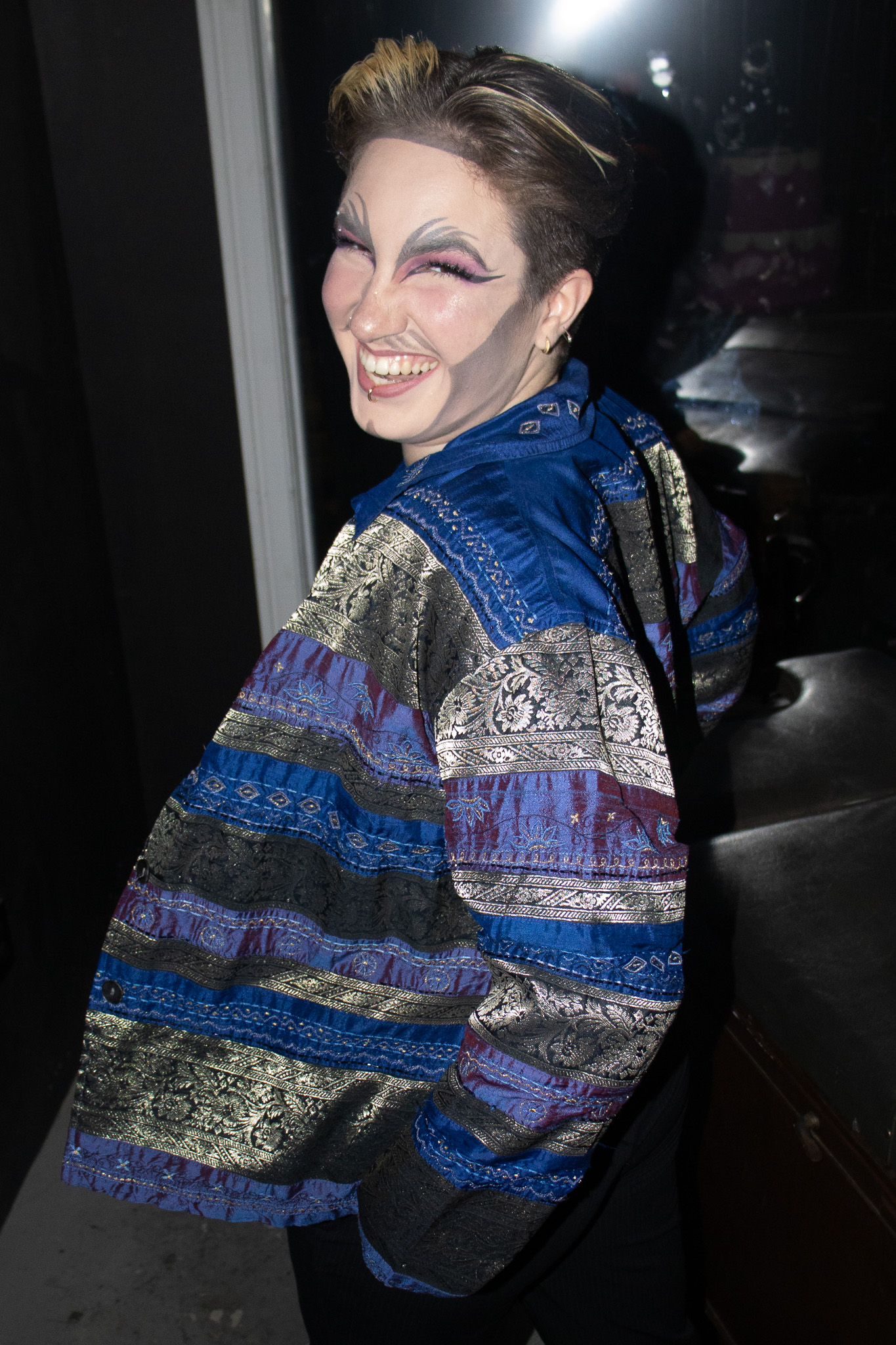
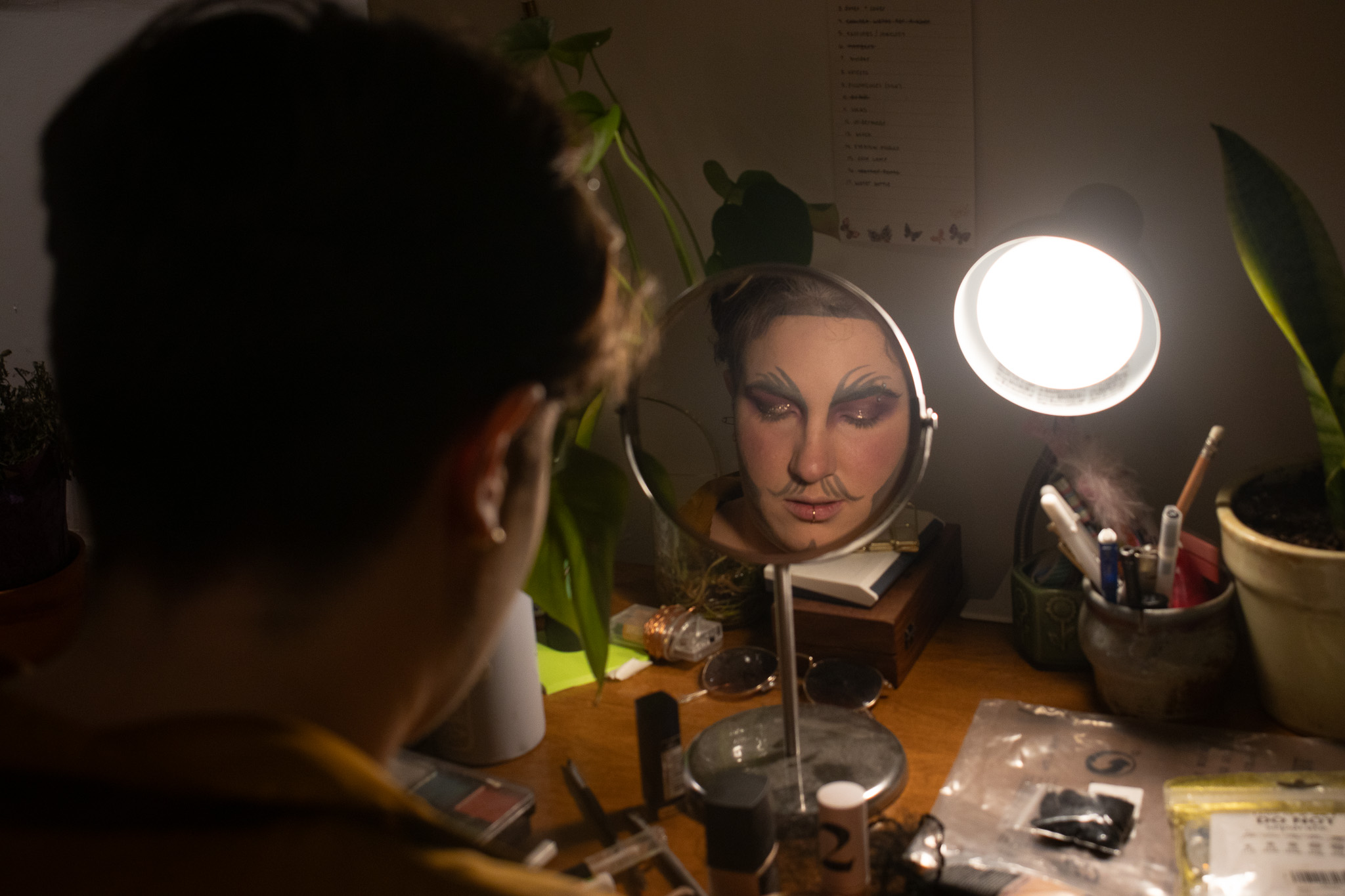
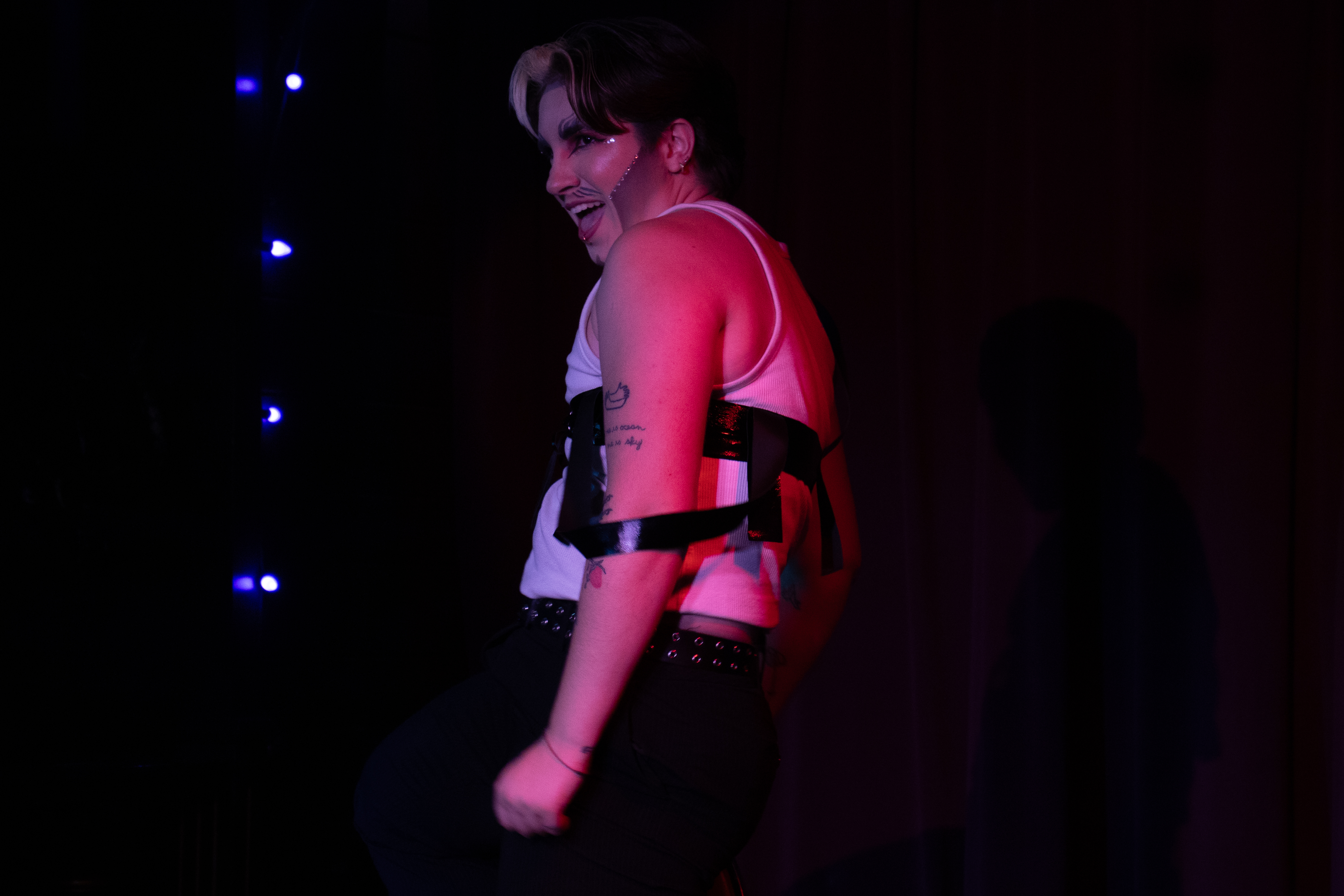
I had my drag debut at Tattooed Moms in their Halloween in July show— July 31st of this year. So I’m very, very new. I’m a fresh, fresh performer. I’m a baby drag king. But it’s been really fun and I feel like the way that everything panned out was very serendipitous.
It’s been really cool to be able to explore masculinity, I think not only through movement and concepts, but also in the creation of this character as Papi Pookie and like—it’s a stupid name. I fucking love my stupid name. It’s ridiculous. Whenever I say it out loud, I’m like, “Oh God, what have I done?” I didn’t have an idea for a drag persona or character before I started. I was just like, “I know I want to do this.” And things are going to fall into place and I’m going to figure it out as I go. And I have been figuring it out as I go and I haven’t entirely figured it out yet and that’s exciting to me. That’s really that’s really cool because if I had it all figured out it would be boring. So I feel like this king/thing that I’m creating is giving me space to play with masculinity and also play with femininity at the same time and see how those two kind of combine for me.
It’s very empowering to me. I feel like that’s one of the biggest words that I can think of to describe drag. It’s very empowering to be able to get on stage in a costume that I thought of, in makeup that I did, to a song that I chose and do choreography that I worked on. I just goof off and then people throw money at me. And it’s obviously not about the money, but the validation is there. It’s very validating and it’s very empowering to have people enjoy the art that I create with my body.
Being in the drag community has been— okay, this is going to sound so dramatic. But it’s been life-changing in a way, and it’s only been three months, but it’s been really incredible. It’s like yeah, we’re in this together. Like it’s cool, we’re growing up together.
GEMINI MXR— PEOPLE SEE ME AS ME
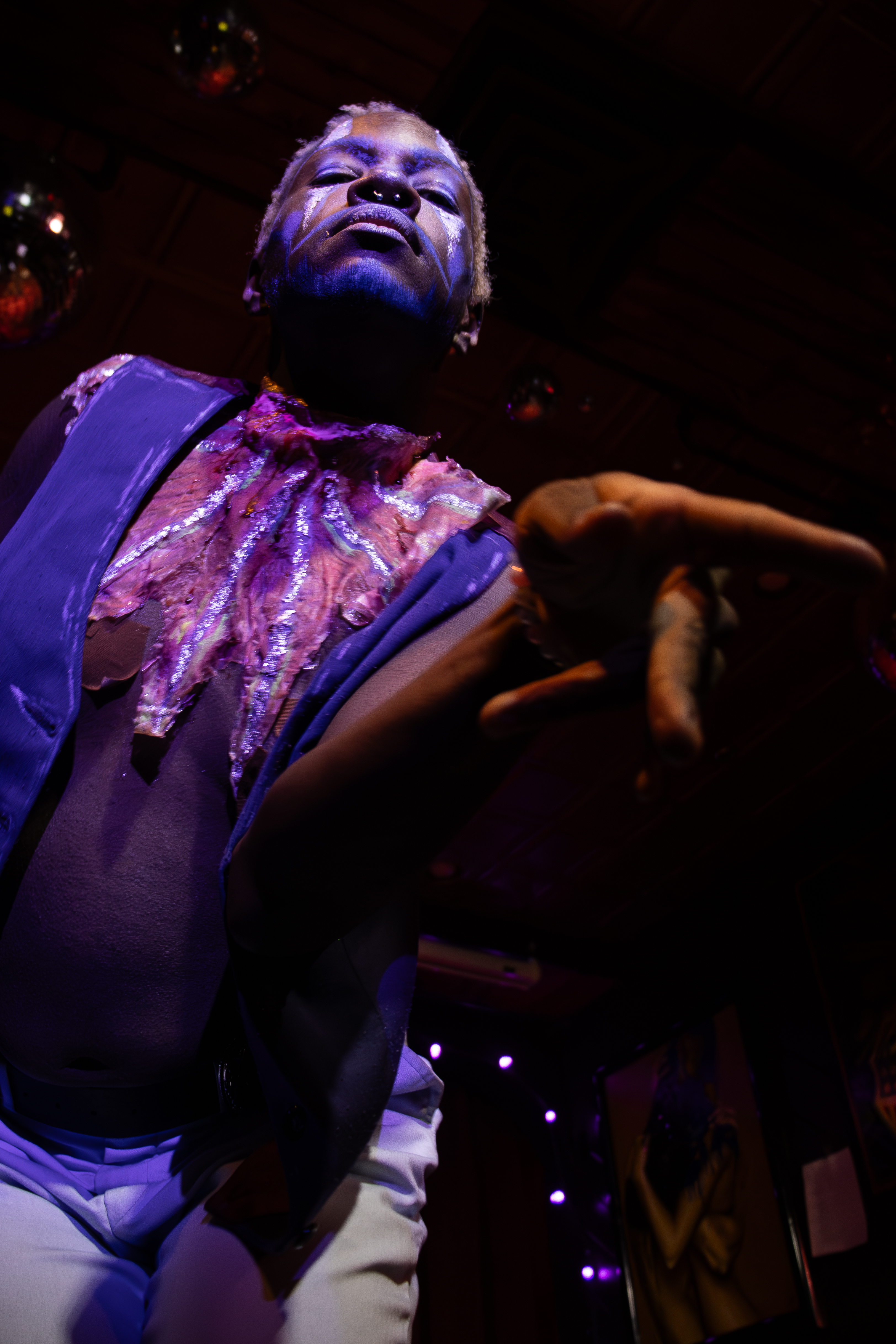
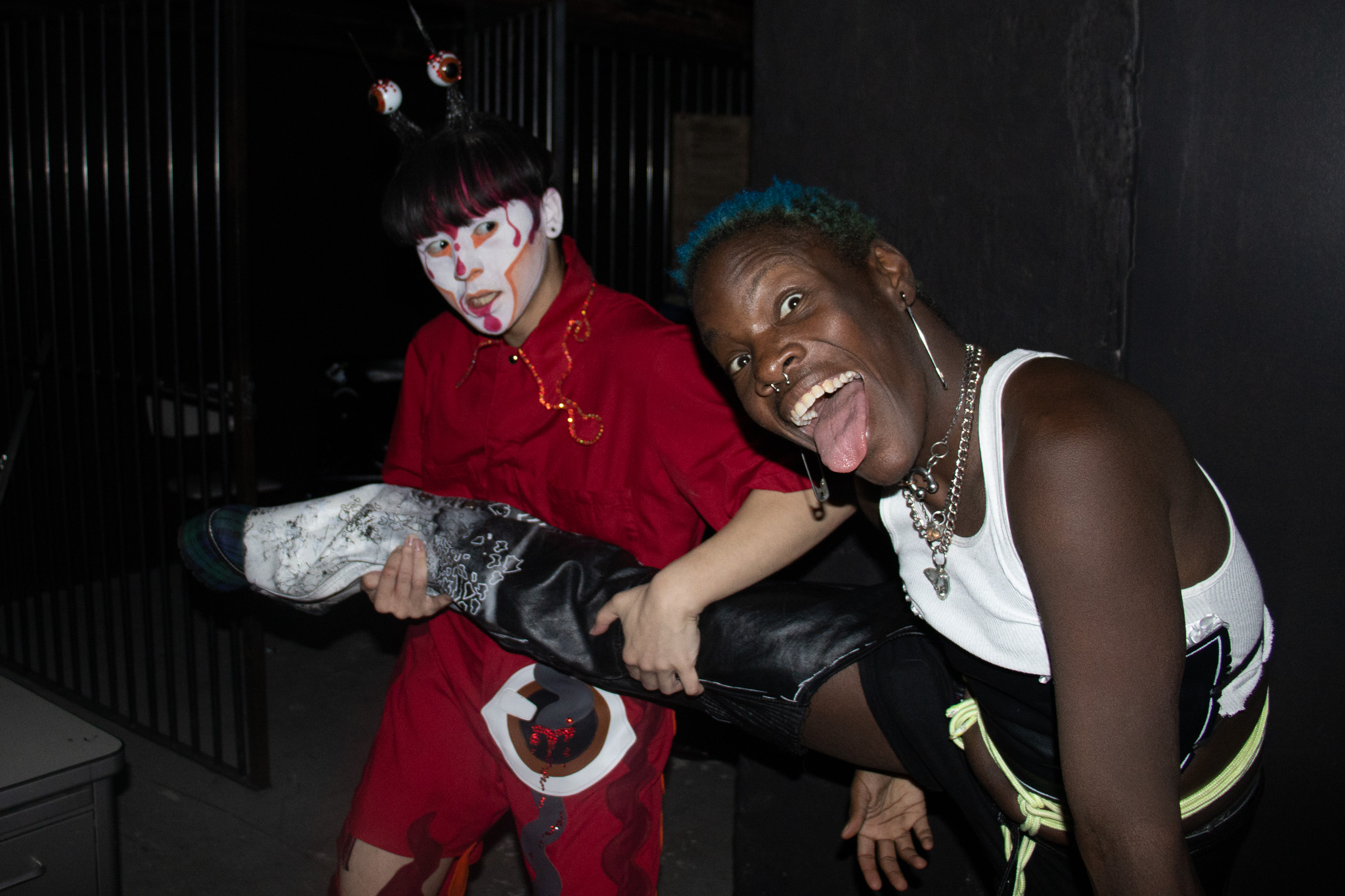
When I hit 30—I didn’t even realize I was going to hit 30. And then I came out as trans at 30, and on my birthday, I was like, I made it to 30, and I’m starting to feel happy for the first time1. After my homelessness journey, drag was the first time I’ve ever felt nerves in a good way, where I could distinguish the difference between being on stage and being nervous but not being scared2.
Being someone who’s moved around a lot and never got to stay longer than six years in a space and now have, it’s great to be back home in my area again and have community here because that’s a hard thing to do. All your classmates grow up, and they have their communities now, they’re established, and you’re like, where do I go. And this is where I fit—that’s why I call them my brothers, because we literally are a little family.
I already was out to myself as trans and was starting to be more public, and I needed an outlet for myself. When I transitioned I threw out all of my makeup, and I love painting for painting’s sake but when you’re femme and doing makeup, it almost feels like a chore and especially when you’re trans and don’t know it yet, and so drag is an outlet for me not to do it as a chore, but as a reward. It’s a fun little, let me just put on some weird shit on my face and play around in the mirror, but also get to do that on stage and dance like I’ve been doing in my room for the past 10 years.
I like the cheers, but it’s more the confidence at the end, because you’re in your head, you’re in your zone, you’re in your own little world. When people notice that, the attention I give to it, it warms me up. People see me as me. They see me.
If you keep learning your body, keep on understanding your transness and who you want to be, your musicality, that’s all you need. It works in all different ways—for your performance, for your personal life, for your transness, it’s all part of that. Learn it, mask and unmask, do that and learn it as you—because when you’re learning you, it makes you happier.
1 A 2023 study led by Columbia University found that over three quarters of transgender adults in the U.S. report suicidal ideation in their lifetime, as compared to a third of cisgender adults. The same study found that 31% more trans people had attempted suicide than their cisgender counterparts. A study on suicide rates in Denmark also found that trans people die of suicide at a rate 3.5 times higher than the rest of population.
2 As of 2020, transgender people are twice as likely as cisgender people to experience homelessness in their lifetime, according to the UCLA School of Law’s Williams Institute.
AURA LEE — ME TIMES 100
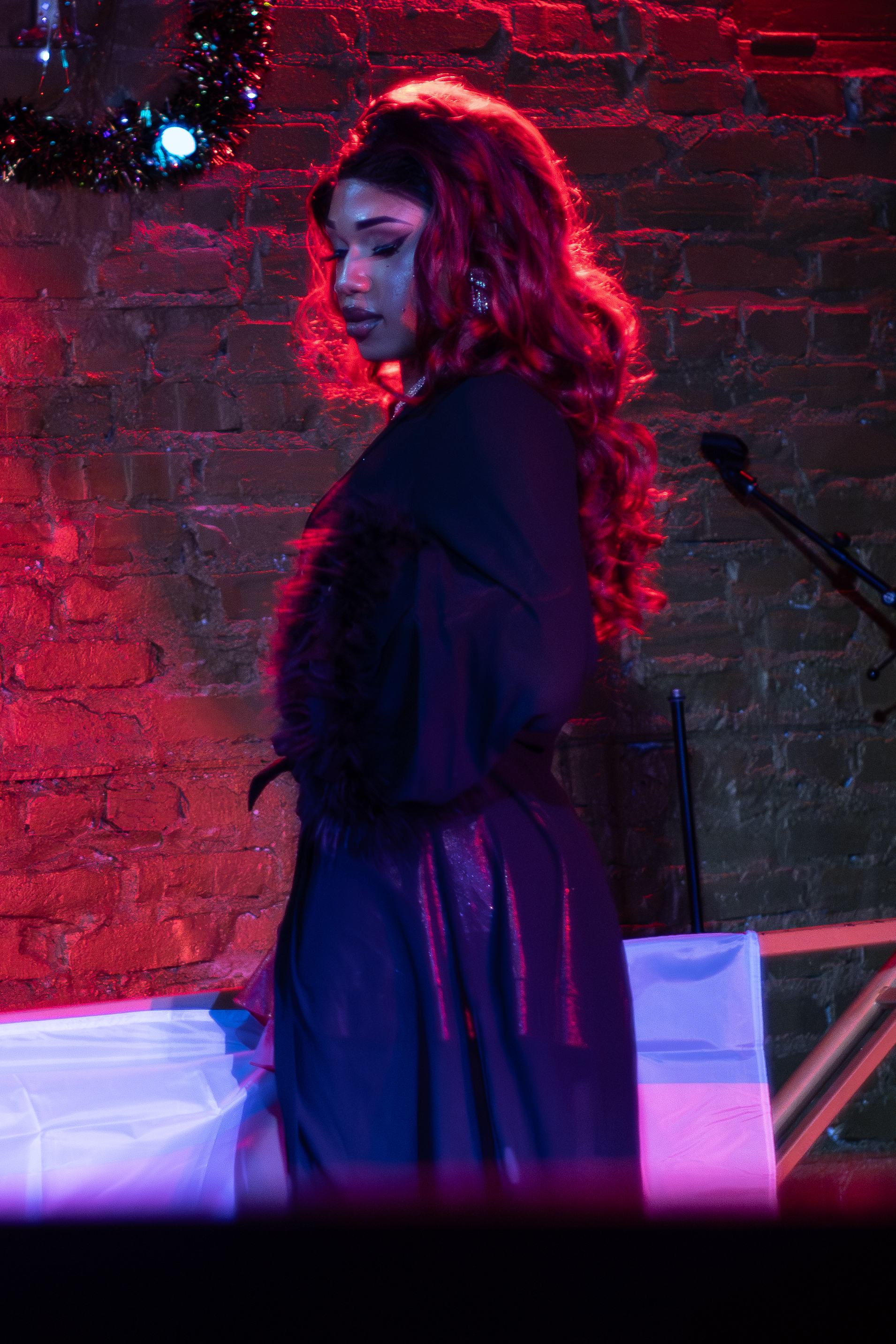
I feel like there’s so many different types of drag but even still I feel like the way each individual puts their unique flair on, it has some kind of correlation with their gender identity. But I think in general and for me at least, having the persona of Aura Lee has definitely unlocked different mindsets, different concepts, different thoughts for me as far as gender and identity and how complex they are and how many layers there are to them.
Being in drag makes me feel like this ultimate part of myself. When I’m loud and proud and doing whatever I want, I expect nothing but bowing down.
Representation is so important and people can talk about it until they’re blue in the face but not know what that means, or know how that feels or know the impact of it.
For me personally, seeing individuals that look like me or in my community, doing things that I want to do, or that I never thought of doing, it gives me that peace of mind. Like, no, you can do it. You can do it if you put your mind to it. Being a black and trans individual in the Philly community, it can feel like there’s not a lot of us or not a lot of representation. Someone has to do it and I don’t have a problem being that person because one day someone might look up to that.
My little trans babies–my advice is do whatever the fuck you want. Literally. Do whatever the fuck you want. Because at the end of the day, who cares? You are the only one living your life. And you are the only one that can make it happy.
 Allison Beck
Leave a comment